Share Hazo William Carter's obituary with others.
Invite friends and family to read the obituary and add memories.
Stay updated
We'll notify you when service details or new memories are added.
You're now following this obituary
We'll email you when there are updates.
Select your format and elements to print
IN LOVING MEMORY OF Hazo William Carter
Hazo William
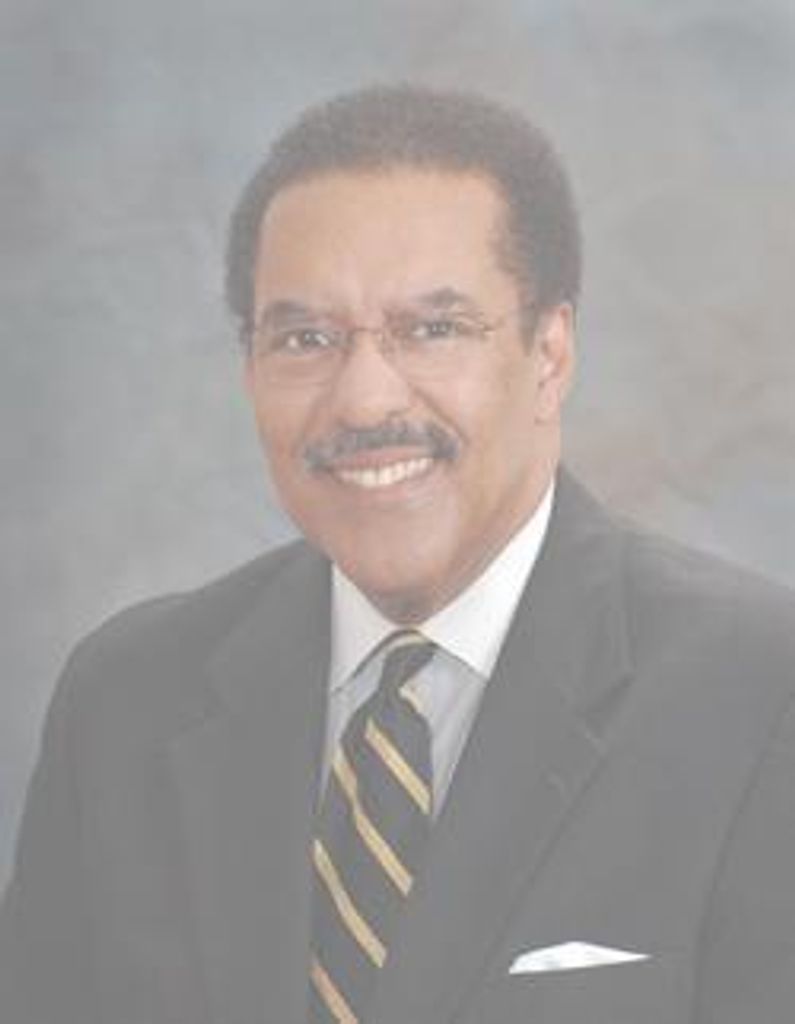
Carter
Apr 22, 1946 — Feb 18, 2014
Hazo William Carter's Obituary
Dr. Hazo William Carter, Jr., 67, of Charleston passed away Tuesday, February 18, 2014.
At the time of his death, Dr. Carter was serving as President Emeritus of West Virginia State University, following a 25-year tenure as President of the institution.
Dr. Carter was born April 22, 1946, in Nashville, Tenn. He received a Bachelor of Science in English from Tennessee State University in 1968 and a Master of Science in Journalism from the University of Illinois Champaign-Urbana in 1969. He received a Doctorate of Education in 1975 from Vanderbilt University in Higher Education Administration.
Before beginning his career in
higher education, Dr. Carter worked as an Operator Services Supervisor with the Illinois Bell Telephone Company and as the Public Information Officer for the Department of Mental Health for the State of Tennessee.
Dr. Carter's career in higher education began at Norfolk State University in Norfolk, Va., where he held a number of different positions, including Executive Assistant to President, Assistant Vice President for Student Affairs and Vice President for Student Affairs. While in Norfolk, Dr. Carter met the woman with whom he would spend his life, Phyllis Harden. After a 14-month courtship, the couple wed on Aug. 8, 1981, and enjoyed 32 wonderful years together.
In August 1983, Dr. Carter was named President of Philander Smith College in Little Rock, Ark. During his time at the college, Dr. Carter embarked on an ambitious fundraising campaign for the college's operations and renovation of facilities, including dormitories, the administration building and gymnasium. He also started a number of new initiatives, including a weekly television program, "Highlights of Philander Smith College."
In 1987, Dr. Carter came to Institute, W.Va., to become the ninth President of what was then West Virginia State College. Throughout his tenure at West Virginia State, Dr. Carter worked tirelessly to articulate the institution's economic impact and presence as the largest institution of higher education located in the Kanawha Valley. He successfully led a 12-year quest to regain the institution's 1890 land-grant status, which enables the University to better serve the surrounding community and the entire state of West Virginia. He encouraged local community leaders, legislators and alumni to support West Virginia State's journey to have land-grant status restored at the state level and recognized and funded at the federal level.
Dr. Carter started the Business, Industry and Education Cluster Program in 1988 to improve communication and cooperation among the business, industry, public education and college communities. One of the cluster's key goals was to help West Virginia State students remain competitive in the job market.
In 1991, Dr. Carter was instrumental in the creation of the West Virginia State University Research and Development Corporation. This organization manages grant funds provided to foster research and other projects at the college. Dr. Carter and his wife, the late Judge Phyllis H. Carter, also established the National Center for Human Relations at West Virginia State in 1999. In addition, the Center for the Advancement of Science, Technology, Engineering and Mathematics (CASTEM) was established during Dr. Carter's presidency to provide STEM outreach programs to support the region's K-12 community.
Following a resolution by the institution's National Alumni Association in 2000, Dr. Carter provided the leadership that resulted in West Virginia State College being designated as West Virginia State University. On April 7, 2004, then-Governor Bob Wise signed the bill that officially changed the institution's status to that of University. Dr. Carter was also active in telling the University's story throughout the region with the creation of a weekly 30-minute television program called "State Today." From its beginning in 1989, Dr. Carter taped several hundred episodes of the program, which aired in the metro-Charleston viewing area.
During Dr. Carter's tenure, West Virginia State underwent two highly successful accreditation visits by the North Central Association of Colleges and Schools (1995, 2005). In addition, during Dr. Carter's presidency, three master's degrees became available for students to earn, and the 4-H Program, which gave rise to the first African-American 4-H camp in the U.S., resumed at West Virginia State in 2000.
In planning for the future of the school, Dr. Carter also began the process of acquiring the property of the former West Virginia Rehabilitation Center, located adjacent to the University's campus in Institute.
Dr. Carter became President Emeritus of West Virginia State University in 2012.
During his time as President, Dr. Carter was an active participant in community life in the Kanawha Valley, serving on various local boards. He served as a member of the boards of directors of: Advantage Valley, the Business and Industrial Development Corporation, the Chemical Alliance Zone, College Summit, Dunbar Rotary Club, Hospice Care Foundation of West Virginia, Salvation Army, St. Francis Hospital, United Way of Central West Virginia, the West Virginia Roundtable and the former West Virginia Intercollegiate Athletic Conference (where he served as president in 2003).
He was also a member of the Greater Kanawha Valley Foundation Board of Trustees and served on the Advisory Committee of United Bank-Dunbar. Additionally, Dr. Carter served as a member of the Martin Luther King Jr. West Virginia Holiday Commission (initially appointed in 1988) and served as Chair of the Commission for many years.
Dr. Carter was a member of the Charleston Regional Chamber of Commerce and Development for more than a decade and served as chairman of their Education Committee for four years. Throughout his association with this organization he served as Vice Chair of their Board of Directors (2003) and was elected as Chair in January 2004; the organization merged with the Charleston Renaissance and the Business and Industrial Development Corporation (BIDCO) in the summer of 2004. Consequently, Dr. Carter became a member of the Board of Directors of the Charleston Area Alliance as well as their Education Committee.
On the national level, Dr. Carter served as a member of President George W. Bush's Board of Advisors for Historically Black Colleges and Universities. He also served on the Board of Directors for the National Institute for Chemical Studies. Dr. Carter served a three-year term (2001-2004) on the Board of Directors of the American Association of State Colleges and Universities (AASCU), where he also served on the Executive Committee (2003-2004). In November 2004, he was appointed to AASCU's Commission on Public University Renewal.
Dr. Carter also served on the Board of the Peabody College of Vanderbilt University Alumni Association from 1992-1998, serving as president from 1996-97 and as the Division II representative on the Presidents Council for the National Collegiate Athletic Association from 1998-2003.
Dr. Carter received many awards and accolades in recognition of his service through the years. Among his most cherished were "Distinguished West Virginian" awards, presented in 1991 by then-Governor Gaston Caperton and in 2004 by then-Governor Bob Wise; Honorary West Virginian award, presented by then-Governor Joe Manchin III in 2007; Distinguished Mountaineer award, presented by Governor Earl Ray Tomblin in 2011; award and designation "President of the Century" by the West Virginia State University National Alumni Association during their biennial conference in 2000 in recognition of his successful efforts to regain land-grant status. In January 2007, he was honored by the House of Delegates of the West Virginia Legislature and recognized for his contributions and service to West Virginia State University, the Kanawha Valley and the State of West Virginia. His alma mater, Tennessee State University, also presented him the university's Highest Achievement Award in Education in recognition of outstanding dedication and accomplishments in the field of Education.
Dr. Carter's life exemplified service both to West Virginia State University and to the surrounding community. He was preceded in death by his wife, the late Judge Phyllis H. Carter. The couple is survived by their daughter, Angela Mable Elizabeth Carter, Health Colleges Diversity Recruiter for the University of Kentucky, Lexington, Ky.
At the time of his death, Dr. Carter was writing a book about his tenure as President of West Virginia State University. Dr. R. Charles Byers, Provost and Vice President for Academic Affairs for the University, and Dr. Orlando F. McMeans, Vice President for Research and Public Service for the University, have pledged to complete Dr. Carter's book.
West Virginia State University will honor Dr. Carter, Jr., on Saturday, Feb. 22, 2014. Beginning at 4 p.m., friends may visit with the family at the P. A. Williams Auditorium located in Ferrell Hall. The funeral service for Dr. Carter will begin at 5 p.m. in the auditorium.
Funeral services will also be held in Nashville, Tenn. Wednesday, Feb. 26, at Clark Memorial United Methodist Church with interment at Greenwood Cemetery. Visitation at the church will begin at 1 p.m. followed by the service at 2 p.m. Friends may send flowers to the church located at 1014 14th Ave. North, Nashville, Tenn., 37208.
In lieu of flowers, the family requests friends attending services at WVSU contribute to the Dr. Hazo W. Carter, Jr. Legacy Endowed Scholarship. To make a donation, contact Cynthia Rakes of the WVSU Foundation at (304) 766-3130 or rakescm@wvstateu.edu.
At the time of his death, Dr. Carter was serving as President Emeritus of West Virginia State University, following a 25-year tenure as President of the institution.
Dr. Carter was born April 22, 1946, in Nashville, Tenn. He received a Bachelor of Science in English from Tennessee State University in 1968 and a Master of Science in Journalism from the University of Illinois Champaign-Urbana in 1969. He received a Doctorate of Education in 1975 from Vanderbilt University in Higher Education Administration.
Before beginning his career in
higher education, Dr. Carter worked as an Operator Services Supervisor with the Illinois Bell Telephone Company and as the Public Information Officer for the Department of Mental Health for the State of Tennessee.
Dr. Carter's career in higher education began at Norfolk State University in Norfolk, Va., where he held a number of different positions, including Executive Assistant to President, Assistant Vice President for Student Affairs and Vice President for Student Affairs. While in Norfolk, Dr. Carter met the woman with whom he would spend his life, Phyllis Harden. After a 14-month courtship, the couple wed on Aug. 8, 1981, and enjoyed 32 wonderful years together.
In August 1983, Dr. Carter was named President of Philander Smith College in Little Rock, Ark. During his time at the college, Dr. Carter embarked on an ambitious fundraising campaign for the college's operations and renovation of facilities, including dormitories, the administration building and gymnasium. He also started a number of new initiatives, including a weekly television program, "Highlights of Philander Smith College."
In 1987, Dr. Carter came to Institute, W.Va., to become the ninth President of what was then West Virginia State College. Throughout his tenure at West Virginia State, Dr. Carter worked tirelessly to articulate the institution's economic impact and presence as the largest institution of higher education located in the Kanawha Valley. He successfully led a 12-year quest to regain the institution's 1890 land-grant status, which enables the University to better serve the surrounding community and the entire state of West Virginia. He encouraged local community leaders, legislators and alumni to support West Virginia State's journey to have land-grant status restored at the state level and recognized and funded at the federal level.
Dr. Carter started the Business, Industry and Education Cluster Program in 1988 to improve communication and cooperation among the business, industry, public education and college communities. One of the cluster's key goals was to help West Virginia State students remain competitive in the job market.
In 1991, Dr. Carter was instrumental in the creation of the West Virginia State University Research and Development Corporation. This organization manages grant funds provided to foster research and other projects at the college. Dr. Carter and his wife, the late Judge Phyllis H. Carter, also established the National Center for Human Relations at West Virginia State in 1999. In addition, the Center for the Advancement of Science, Technology, Engineering and Mathematics (CASTEM) was established during Dr. Carter's presidency to provide STEM outreach programs to support the region's K-12 community.
Following a resolution by the institution's National Alumni Association in 2000, Dr. Carter provided the leadership that resulted in West Virginia State College being designated as West Virginia State University. On April 7, 2004, then-Governor Bob Wise signed the bill that officially changed the institution's status to that of University. Dr. Carter was also active in telling the University's story throughout the region with the creation of a weekly 30-minute television program called "State Today." From its beginning in 1989, Dr. Carter taped several hundred episodes of the program, which aired in the metro-Charleston viewing area.
During Dr. Carter's tenure, West Virginia State underwent two highly successful accreditation visits by the North Central Association of Colleges and Schools (1995, 2005). In addition, during Dr. Carter's presidency, three master's degrees became available for students to earn, and the 4-H Program, which gave rise to the first African-American 4-H camp in the U.S., resumed at West Virginia State in 2000.
In planning for the future of the school, Dr. Carter also began the process of acquiring the property of the former West Virginia Rehabilitation Center, located adjacent to the University's campus in Institute.
Dr. Carter became President Emeritus of West Virginia State University in 2012.
During his time as President, Dr. Carter was an active participant in community life in the Kanawha Valley, serving on various local boards. He served as a member of the boards of directors of: Advantage Valley, the Business and Industrial Development Corporation, the Chemical Alliance Zone, College Summit, Dunbar Rotary Club, Hospice Care Foundation of West Virginia, Salvation Army, St. Francis Hospital, United Way of Central West Virginia, the West Virginia Roundtable and the former West Virginia Intercollegiate Athletic Conference (where he served as president in 2003).
He was also a member of the Greater Kanawha Valley Foundation Board of Trustees and served on the Advisory Committee of United Bank-Dunbar. Additionally, Dr. Carter served as a member of the Martin Luther King Jr. West Virginia Holiday Commission (initially appointed in 1988) and served as Chair of the Commission for many years.
Dr. Carter was a member of the Charleston Regional Chamber of Commerce and Development for more than a decade and served as chairman of their Education Committee for four years. Throughout his association with this organization he served as Vice Chair of their Board of Directors (2003) and was elected as Chair in January 2004; the organization merged with the Charleston Renaissance and the Business and Industrial Development Corporation (BIDCO) in the summer of 2004. Consequently, Dr. Carter became a member of the Board of Directors of the Charleston Area Alliance as well as their Education Committee.
On the national level, Dr. Carter served as a member of President George W. Bush's Board of Advisors for Historically Black Colleges and Universities. He also served on the Board of Directors for the National Institute for Chemical Studies. Dr. Carter served a three-year term (2001-2004) on the Board of Directors of the American Association of State Colleges and Universities (AASCU), where he also served on the Executive Committee (2003-2004). In November 2004, he was appointed to AASCU's Commission on Public University Renewal.
Dr. Carter also served on the Board of the Peabody College of Vanderbilt University Alumni Association from 1992-1998, serving as president from 1996-97 and as the Division II representative on the Presidents Council for the National Collegiate Athletic Association from 1998-2003.
Dr. Carter received many awards and accolades in recognition of his service through the years. Among his most cherished were "Distinguished West Virginian" awards, presented in 1991 by then-Governor Gaston Caperton and in 2004 by then-Governor Bob Wise; Honorary West Virginian award, presented by then-Governor Joe Manchin III in 2007; Distinguished Mountaineer award, presented by Governor Earl Ray Tomblin in 2011; award and designation "President of the Century" by the West Virginia State University National Alumni Association during their biennial conference in 2000 in recognition of his successful efforts to regain land-grant status. In January 2007, he was honored by the House of Delegates of the West Virginia Legislature and recognized for his contributions and service to West Virginia State University, the Kanawha Valley and the State of West Virginia. His alma mater, Tennessee State University, also presented him the university's Highest Achievement Award in Education in recognition of outstanding dedication and accomplishments in the field of Education.
Dr. Carter's life exemplified service both to West Virginia State University and to the surrounding community. He was preceded in death by his wife, the late Judge Phyllis H. Carter. The couple is survived by their daughter, Angela Mable Elizabeth Carter, Health Colleges Diversity Recruiter for the University of Kentucky, Lexington, Ky.
At the time of his death, Dr. Carter was writing a book about his tenure as President of West Virginia State University. Dr. R. Charles Byers, Provost and Vice President for Academic Affairs for the University, and Dr. Orlando F. McMeans, Vice President for Research and Public Service for the University, have pledged to complete Dr. Carter's book.
West Virginia State University will honor Dr. Carter, Jr., on Saturday, Feb. 22, 2014. Beginning at 4 p.m., friends may visit with the family at the P. A. Williams Auditorium located in Ferrell Hall. The funeral service for Dr. Carter will begin at 5 p.m. in the auditorium.
Funeral services will also be held in Nashville, Tenn. Wednesday, Feb. 26, at Clark Memorial United Methodist Church with interment at Greenwood Cemetery. Visitation at the church will begin at 1 p.m. followed by the service at 2 p.m. Friends may send flowers to the church located at 1014 14th Ave. North, Nashville, Tenn., 37208.
In lieu of flowers, the family requests friends attending services at WVSU contribute to the Dr. Hazo W. Carter, Jr. Legacy Endowed Scholarship. To make a donation, contact Cynthia Rakes of the WVSU Foundation at (304) 766-3130 or rakescm@wvstateu.edu.
To send flowers or plant a memorial tree in memory, please visit our flower store.
Hazo William Carter's Guestbook
Visits: 13
This site is protected by reCAPTCHA and the
Google Privacy Policy and Terms of Service apply.
Service map data © OpenStreetMap contributors